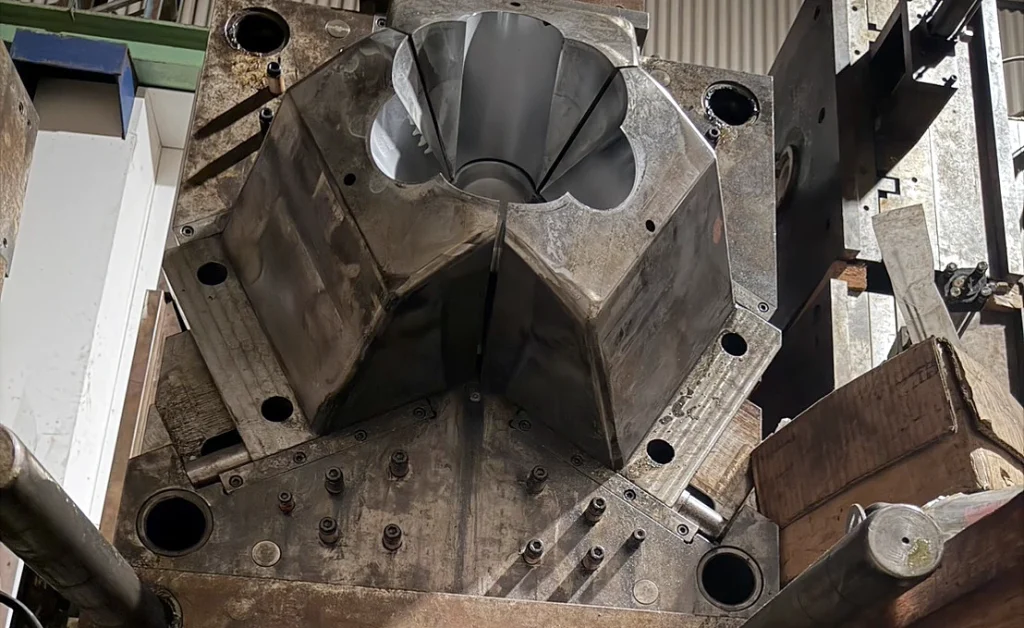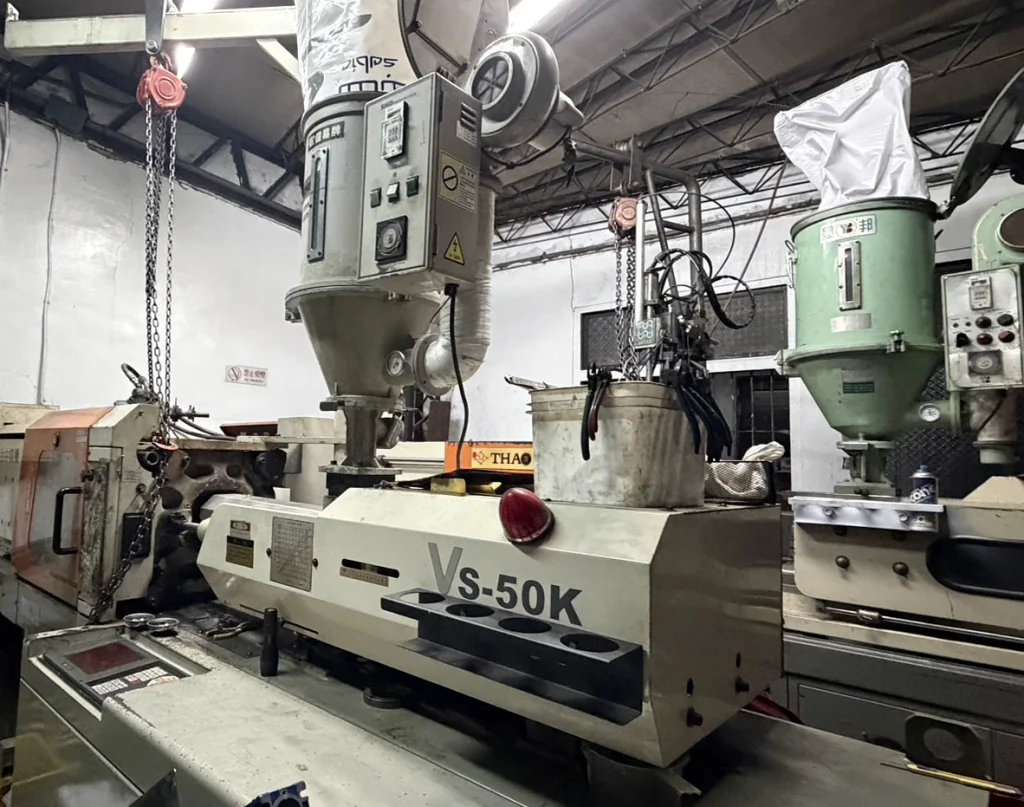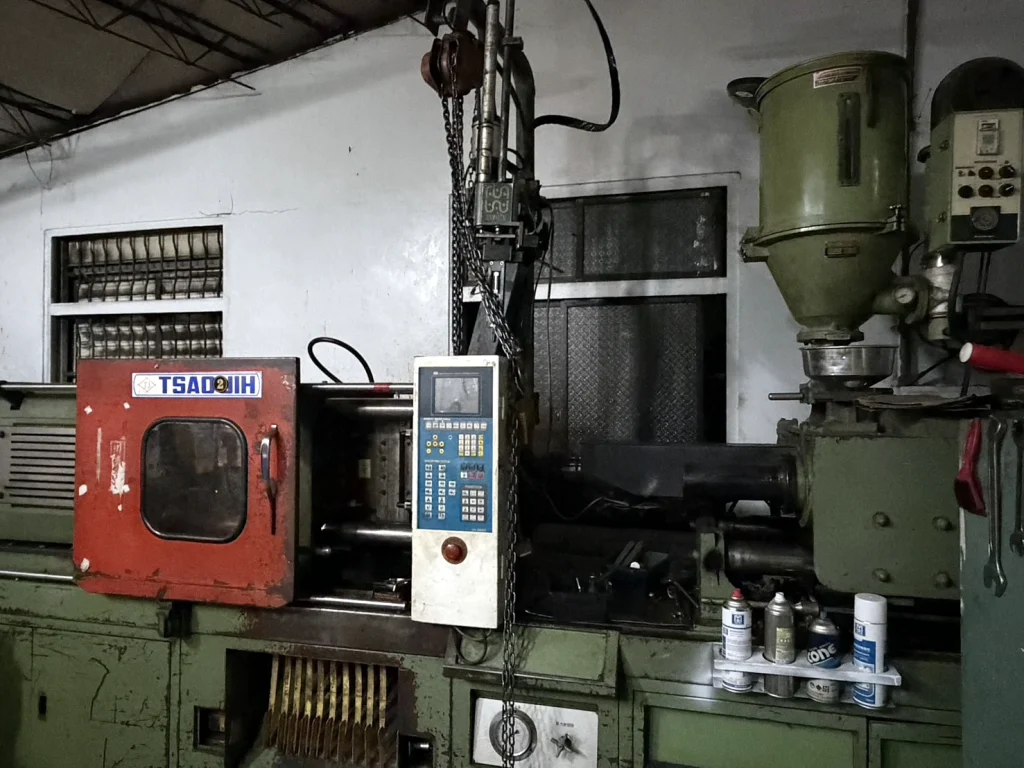
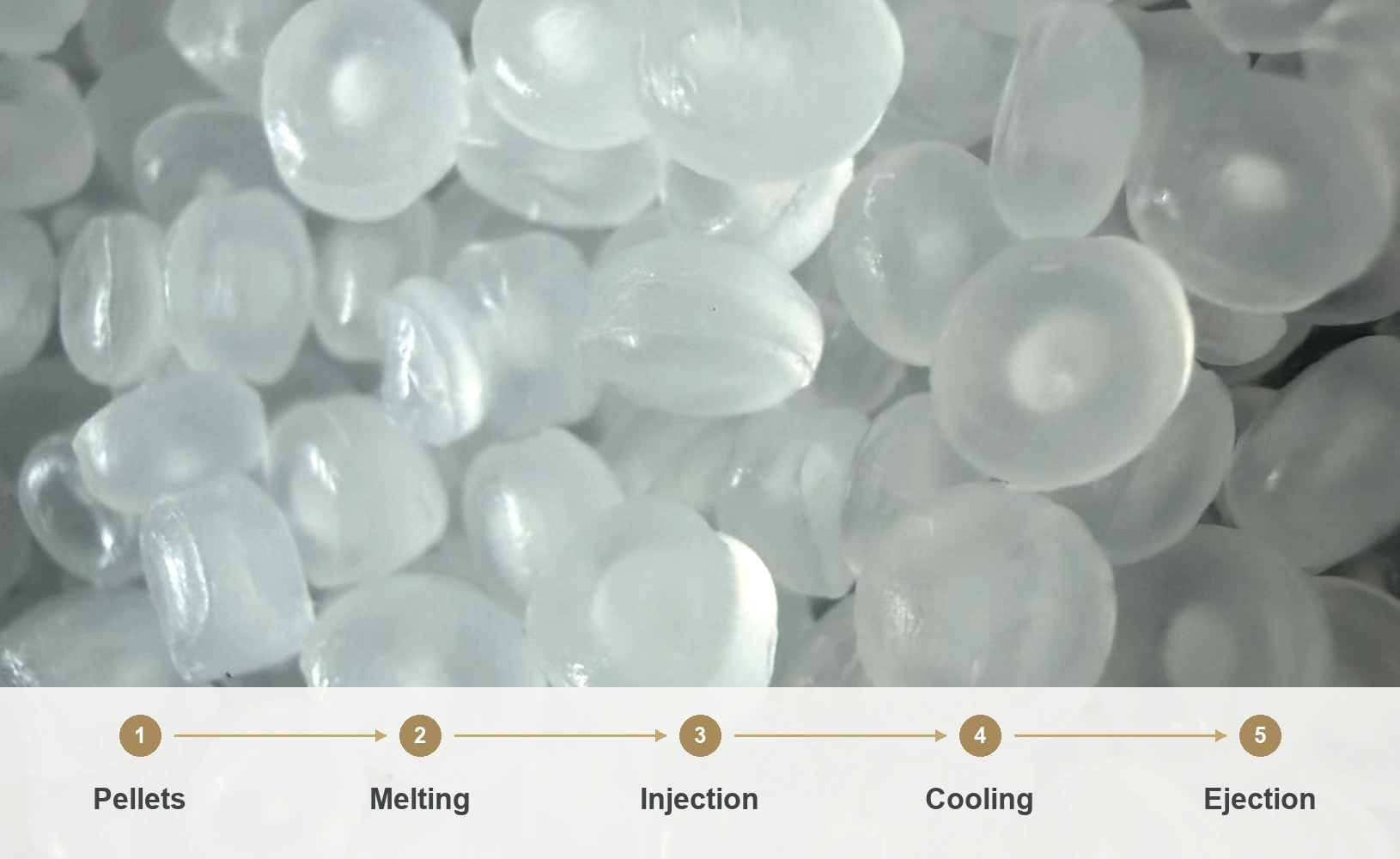
Most everyday plastic parts, from caps to tool housings and garden fittings, are made by injection molding. In short, plastic pellets are melted, injected into a mold, cooled and ejected. Chien Chen, an injection molder in Fengyuan, Taichung for nearly 40 years, walks through the process in five steps.
1. Prepare the pellets: material and drying
- The raw material is plastic pellets, such as PP, PE, ABS and nylon. See choosing between PP, PE and ABS.
- Color masterbatch, glass fiber or other additives can be added to adjust color, strength and weather resistance.
- Moisture-sensitive resins such as nylon and PC must be dried first, or parts may show splay marks or bubbles.
The cover photo shows clear PP pellets in our factory.
2. Melting: the screw and barrel
- Pellets drop from the hopper into the barrel, where heater bands warm them while a rotating screw conveys them forward.
- The plastic gradually melts into a viscous melt, typically between 180 and 300°C depending on the resin.
- Too cold and it will not flow; too hot and the material may degrade or discolor, so each resin has its own processing window.
3. Injection and packing: fill the mold
- The screw moves forward and injects the melt into the mold under high pressure.
- After filling, packing pressure compensates for shrinkage as the plastic cools, preventing sink marks.
- The mold is held shut by the machine’s clamping force.
- Incorrect speed or pressure can cause short shots or flash.
4. Cooling
- Cooling channels inside the mold harden the part.
- Cooling is usually the longest part of the cycle; thicker walls need more time.
- Uneven cooling can cause warpage.
5. Ejection and finishing
- The mold opens and ejector pins push the part out for a robot or operator to collect.
- The gate is trimmed and the part is checked for appearance and dimensions.
- The mold closes for the next shot, and the cycle repeats for consistent production.
- Secondary operations such as ultrasonic welding, hot stamping, tapping and assembly can follow.
What is injection molding best for?
- Best for: high volumes, consistent dimensions and complex shapes.
- Advantages: fast production, low unit cost and stable quality.
- Keep in mind: a mold is needed first, so low volumes carry a higher tooling cost per part. See tooling cost and choosing the cavity count.
Injection molding at Chien Chen, Fengyuan
- Founded in 1987 in Fengyuan, Taichung, specializing in plastic injection molding for nearly 40 years.
- 50–700T injection molding machines for parts from small fittings to large housings. See what each tonnage range suits.
- In-house tooling, from mold making and trials to production.
- Ultrasonic welding, hot stamping, tapping and assembly in-house; painting, plating, printed packaging and more through long-term partners, shipped together.
Learn more about Taichung’s injection molding cluster or our plastic injection molding services in Taiwan.
Looking for an injection molder in Taichung, Taiwan? Send us your drawings, samples or product idea, and Chien Chen will plan everything from material selection and tooling to production. Request a quote.