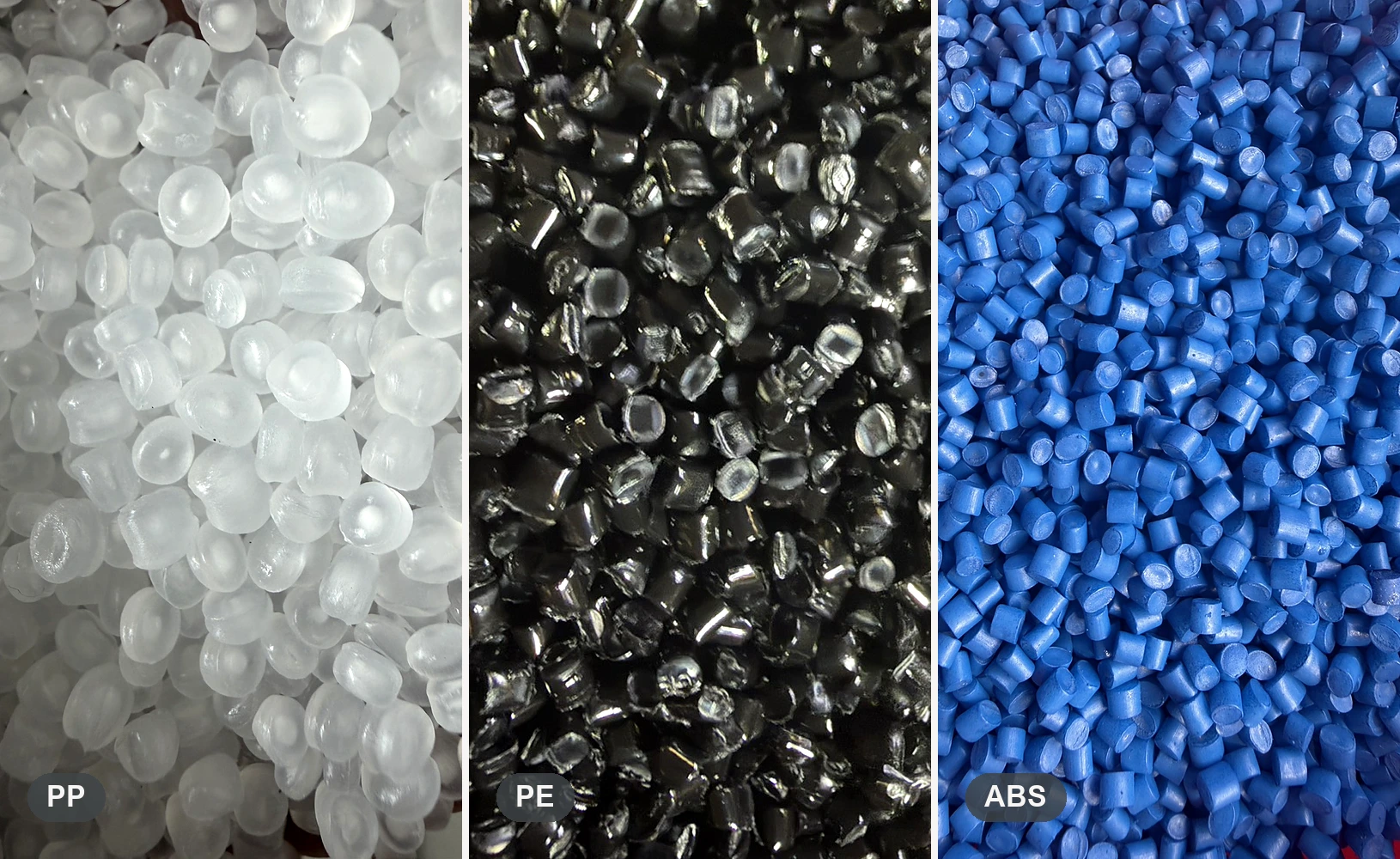
Choosing the right material is often the first step in developing a plastic product. PP, PE and ABS are the three most common commodity plastics in injection molding: affordable, easy to process and found in everything from garden products to housings. Here is a quick comparison.
PP (Polypropylene)
- With a density of about 0.9, it is one of the lightest common plastics.
- Good chemical resistance to acids, alkalis and detergents.
- Excellent fatigue resistance, ideal for integral living hinges such as flip-top caps.
- Becomes brittle at low temperatures; outdoor grades usually add UV stabilizers and impact modifiers.
Typical uses: garden watering parts, storage boxes, caps and containers.
PE (Polyethylene)
- Flexible and impact resistant, even at low temperatures.
- Chien Chen can adjust the PE formulation to your product, customizing hardness and enhancing impact and weather resistance.
- Smooth surface and very low water absorption.
- Lower stiffness and heat resistance than PP.
Typical uses: lids, soft parts, containers and protective covers.
ABS
- A good balance of stiffness and toughness with stable dimensions.
- Glossy surface that is easy to paint, plate and print.
- Limited weather resistance; outdoor parts need UV-stabilized grades or surface treatment.
Typical uses: appliance and electronics housings, tool housings and toys.
How to choose
- Light weight, chemical resistance and low cost: PP.
- Softness and low-temperature impact strength: PE.
- Cosmetic appearance and secondary finishing: ABS.
- Long-term outdoor use: whichever resin you choose, specify a UV-stabilized grade.
Chien Chen has been molding plastics in Taichung, Taiwan for nearly 40 years. We can help you choose the right material for your application, environment and budget. Send us your drawings or samples and request a quote.