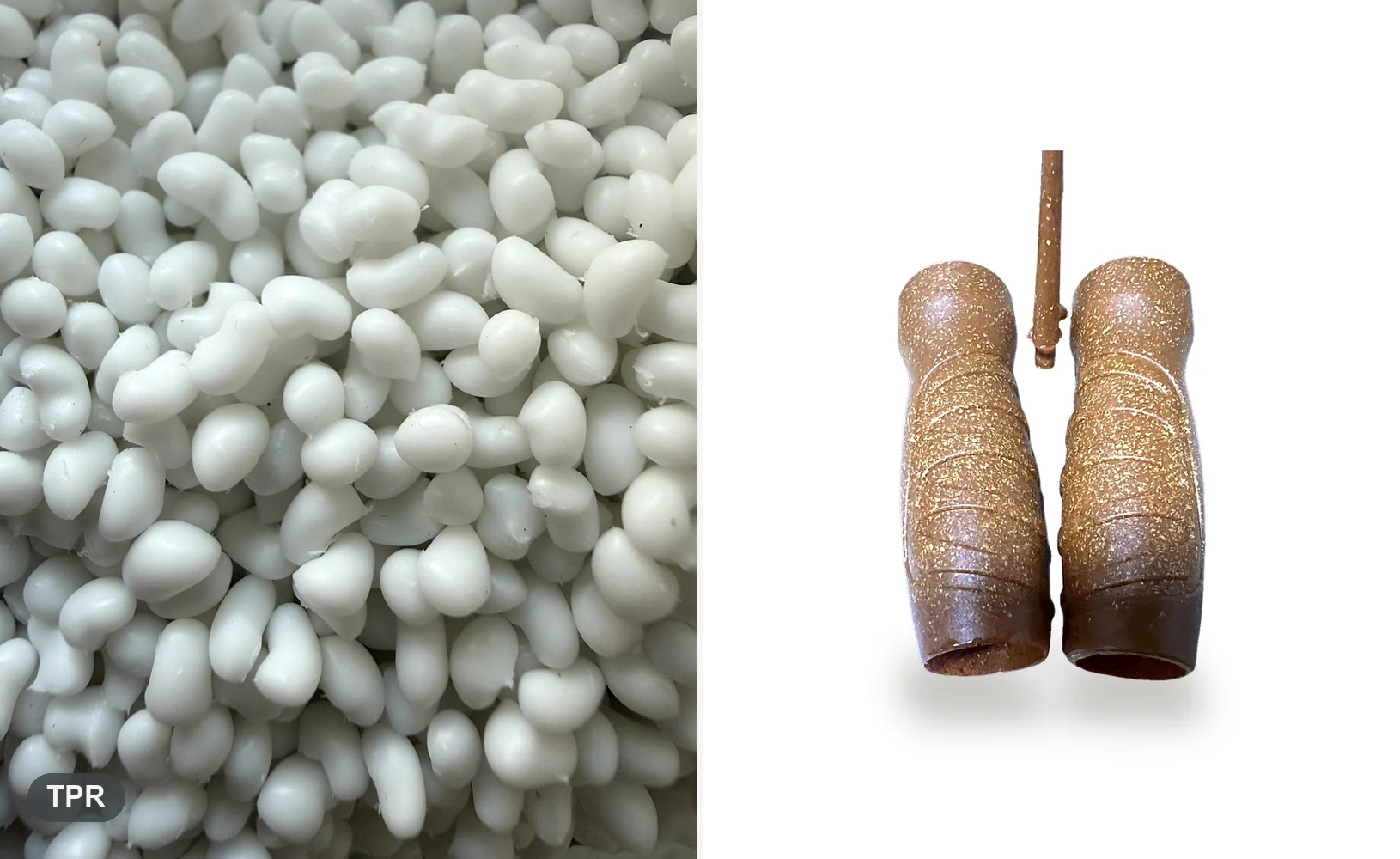
For grips and anti-slip pads that people touch every day, the feel of the material shapes the first impression of a product. TPE/TPR is the most common choice, and Chien Chen has also developed grips made from a cork and TPR composite.
What are TPE and TPR?
- TPE (thermoplastic elastomer) covers materials that behave like rubber but can be injection molded like plastics.
- TPR (thermoplastic rubber) usually refers to SBS- or SEBS-based TPEs; the two terms are often used interchangeably.
- A wide hardness range, usually specified in Shore A, lets you tune the feel.
- No vulcanization is needed, and runners can be recycled.
Benefits and typical uses
- Soft, non-slip and comfortable to hold.
- Can be combined with rigid plastics such as PP for soft-grip handles; how well they bond depends on material compatibility and mold design.
Typical uses: tool and garden tool grips, anti-slip pads, seals and sports equipment parts.
Cork + TPR composite
- Keeps the natural grain and warm feel of cork.
- TPR adds flexibility and grip.
- Lightweight, ideal for products held for long periods.
Chien Chen has developed grip products in a cork and TPR blend, combining a natural look with everyday practicality for brands that want to stand out.
Development tips
- Hardness affects both feel and durability, so we recommend sampling before you decide.
- Soft materials are prone to flash, so mold precision is critical.
- If bonding to a rigid part, confirm material compatibility first.
Chien Chen has been molding plastics in Taichung, Taiwan for nearly 40 years. We can help you choose the right material for your application, environment and budget. Send us your drawings or samples and request a quote.